
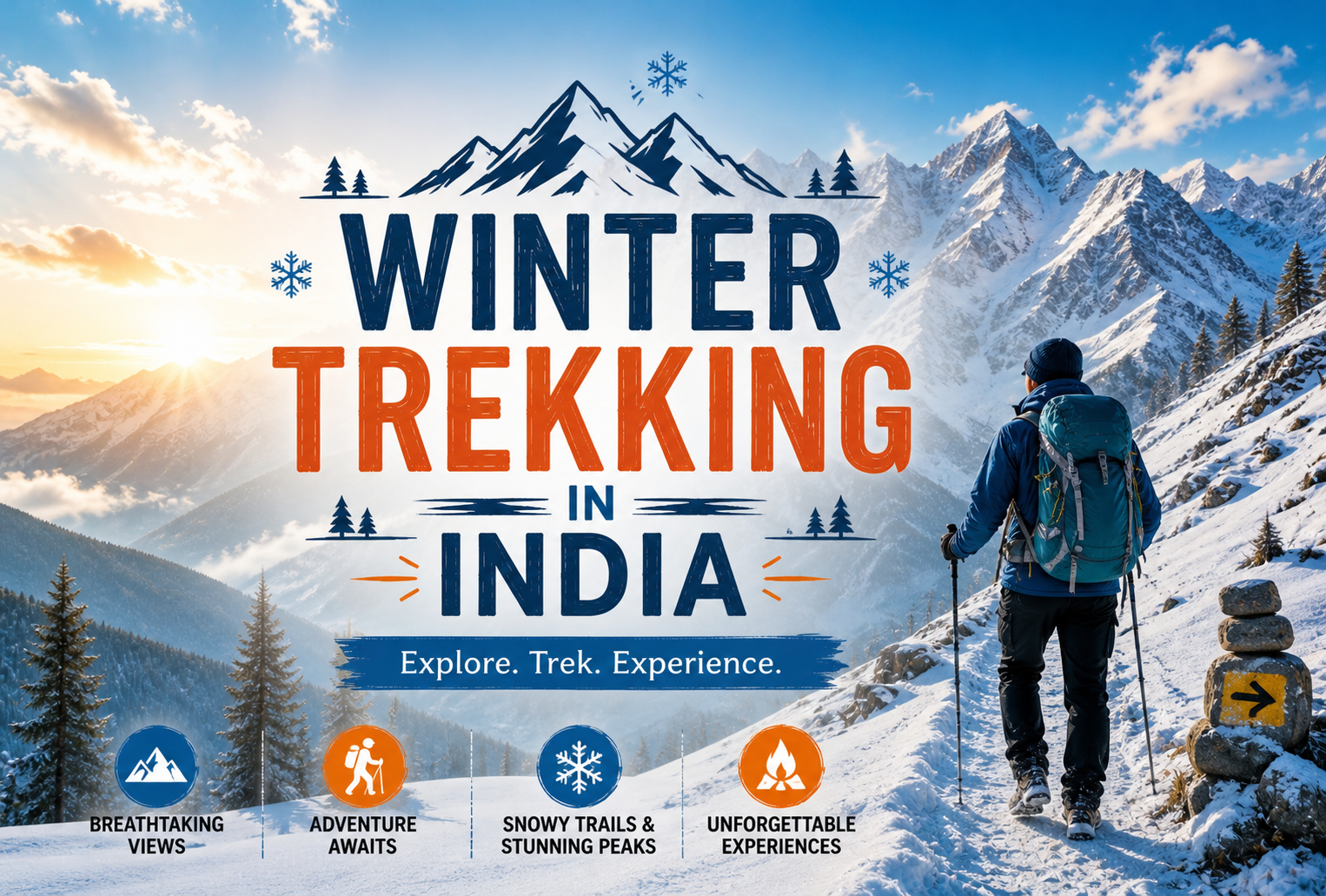
Winter trekking offers a unique opportunity to explore snow-covered mountains, frozen landscapes, pine forests, and breathtaking Himalayan views. However, trekking during winter requires more preparation than hiking in warmer months. Low temperatures, snowfall, icy trails, and changing weather conditions can make mountain journeys challenging, especially for beginners.
Whether you are planning your first snow trek or preparing for a more demanding mountain adventure, understanding the right equipment, clothing, fitness requirements, and safety precautions is essential.
This guide to Winter Trekking in India covers everything you need to prepare for cold mountain conditions, including a practical packing list, clothing recommendations, fitness advice, and essential precautions for a safer trekking experience.
1. Choose the Right Winter Trek for Your Experience
Before planning a winter adventure, choose a route that matches your fitness level, experience, and comfort with cold weather. Some treks are suitable for beginners with a qualified guide, while others require previous trekking experience and knowledge of snow conditions.
Popular Winter Treks in India
Kedarkantha Trek, Uttarakhand
Kedarkantha is a popular Himalayan trek known for forest trails, mountain campsites, and panoramic summit views. Snowfall can make the route more challenging, so proper equipment and an experienced guide are important.
Brahmatal Trek, Uttarakhand
Brahmatal is known for alpine scenery, mountain views, and snow-covered trails during suitable winter conditions. Weather and trail conditions can change quickly, requiring careful planning.
Dayara Bugyal, Uttarakhand
Dayara Bugyal is a scenic alpine meadow destination that can offer beautiful winter landscapes. Snow depth, accessibility, and route difficulty vary throughout the season.
Kuari Pass, Uttarakhand
Kuari Pass is known for its mountain views and forested trails. Winter conditions may require additional preparation, and the route should be assessed according to current weather and snow conditions.
Sandakphu, West Bengal
Sandakphu offers views of some of the world's highest mountain peaks. Winter weather can bring cold winds, snow, and difficult trail conditions, so trekkers should check local guidance before departure.
These are some of the best winter treks in India to research when planning a mountain holiday. None should be considered automatically safe or suitable for beginners in every weather condition.
2. How to Prepare for a Himalayan Winter Trek
Proper planning helps reduce avoidable risks and makes the trekking experience more comfortable.
Research the Route and Weather
Learn about the trail distance, elevation gain, expected temperatures, accommodation options, and available emergency support. Check recent weather forecasts and ask your trek operator about snow depth, road access, and route conditions.
Avoid relying on old photographs or previous years' reports because winter mountain conditions can change significantly.
Book a Reliable Trek Operator
For snowy Himalayan routes, beginners should consider a reputable trekking operator with trained guides, suitable equipment, clear safety procedures, and an emergency response plan.
Ask about group sizes, guide qualifications, communication arrangements, evacuation procedures, and whether essential equipment is included in the package.
Prepare Your Documents
Carry your identification, booking information, relevant permits, emergency contacts, and travel insurance details if applicable. Confirm whether your selected route requires permits or additional registration.
Build a Realistic Itinerary
Allow enough time for travel, acclimatization when necessary, and unexpected weather delays. Do not create an itinerary that forces you to continue when conditions become unsafe.
For official travel and outdoor information, consult the Ministry of Tourism, Government of India and local authorities responsible for your trekking destination.
3. What to Wear for Winter Trekking
Choosing suitable clothing is one of the most important parts of preparing for cold mountain conditions. The aim is to stay warm and dry while allowing sweat to escape during physical activity.
Understand the Layering System
Layering clothes for mountain trekking makes it easier to adjust your temperature as you walk, rest, or experience changing weather.
Base Layer
The base layer sits next to your skin and helps manage moisture. Choose synthetic moisture-wicking fabric or merino wool. Avoid relying on cotton because it retains moisture and can leave you feeling cold.
Insulating Layer
The insulating layer helps retain body heat. Fleece jackets, synthetic insulated jackets, and down jackets can all be useful, depending on the conditions and activity level.
Outer Shell Layer
A waterproof and wind-resistant outer shell protects you from snow, wind, and precipitation. Breathability is important because sweat can accumulate beneath poorly ventilated clothing.
Protect Your Hands, Feet, and Head
Cold extremities can become uncomfortable quickly, so suitable accessories are essential.
-
Gloves: Carry warm gloves and consider waterproof outer mittens for snowy conditions.
-
Socks: Choose moisture-managing trekking socks and carry spare pairs.
-
Footwear: Use trekking boots with suitable grip, ankle support, and room for warm socks.
-
Head protection: Carry a warm beanie or other suitable head covering.
-
Neck protection: A neck gaiter or buff can protect exposed skin from cold wind.
-
Eye protection: Sunglasses or suitable snow goggles help protect your eyes from intense sunlight and reflected snow glare.
The right combination depends on temperature, wind, precipitation, and the technical difficulty of your route.
4. Winter Trekking Gear Checklist
A reliable winter trekking gear checklist helps you avoid forgetting essential equipment before departure.
Clothing and Personal Protection
-
Moisture-wicking base layers
-
Warm insulating jacket
-
Waterproof and wind-resistant outer shell
-
Trekking trousers and suitable thermal layers
-
Warm gloves and spare hand protection
-
Beanie, neck gaiter, and trekking socks
-
Waterproof trekking boots
-
Sunglasses or snow goggles
Trekking Equipment
-
Comfortable backpack with a suitable rain cover
-
Trekking poles
-
Headlamp with spare or rechargeable power
-
Water bottles or insulated containers
-
Map or offline navigation
-
Phone and power bank kept warm and dry
-
Gaiters if required by snow conditions
-
Microspikes, crampons, or snowshoes when appropriate for the route and conditions
Traction equipment is not interchangeable: microspikes, crampons, and snowshoes serve different purposes. Use the equipment recommended for the terrain, and learn how to use it properly before starting.
Safety and Emergency Supplies
-
First-aid kit
-
Personal medications
-
Emergency contact details
-
Whistle
-
High-energy snacks
-
Sun protection and lip balm
-
Emergency shelter or bivouac equipment when required by the route
-
Appropriate navigation and communication equipment
A standard packing list may not be sufficient for remote or technical winter routes. Follow the requirements provided by your guide or trekking operator.
5. Winter Trekking Fitness Preparation
Winter trekking fitness preparation should begin several weeks before departure, especially if the route includes steep climbs, long walking days, or high elevations.
You do not need to be an elite athlete for every beginner trek, but you should be comfortable walking for extended periods while carrying a backpack.
Improve Cardiovascular Endurance
Activities such as brisk walking, cycling, jogging, and stair climbing can help improve stamina. Gradually increase duration and intensity rather than attempting difficult workouts immediately before your trek.
Strengthen Your Legs and Core
Exercises such as squats, step-ups, lunges, and controlled step-downs can help develop the strength needed for uphill climbs and descents.
Include balance exercises where appropriate, because uneven and slippery terrain can challenge stability.
Practice Walking with a Backpack
Begin with a light backpack and gradually increase the load to a comfortable, realistic trekking weight. Wear your actual trekking boots during training to identify discomfort before the trip.
Prepare for Altitude
High-altitude trekking places additional demands on the body. Fitness does not eliminate the risk of altitude illness, and ascending too quickly can be dangerous.
Follow your trek operator's acclimatization schedule and learn the symptoms of altitude sickness before departure.
6. Cold-Weather Hiking Safety Tips
Cold-weather hiking safety tips are essential because winter conditions can change quickly, even on familiar trails.
Check the Weather Before Starting
Review current forecasts and local guidance before each trekking day. Pay attention to snowfall, strong winds, temperature drops, visibility, and avalanche warnings where relevant.
Postpone or change your plans if the conditions exceed your group's experience or equipment.
Recognize Signs of Hypothermia
Hypothermia occurs when the body loses heat faster than it can produce it. Warning signs may include persistent shivering, unusual tiredness, confusion, slurred speech, and poor coordination.
If hypothermia is suspected, seek emergency assistance, protect the person from wind and cold, replace wet clothing with dry layers when possible, and warm the person gradually. Handle someone with severe hypothermia gently and do not delay professional medical help.
Watch for Frostbite
Frostbite can affect exposed skin and extremities. Numbness, unusual skin color, and hard or waxy-looking skin can be warning signs.
Move to a warmer, sheltered place and seek medical assistance. Do not rub affected skin or attempt to thaw frostbitten tissue if it could freeze again before medical care.
Stay Hydrated and Eat Regularly
Cold conditions can reduce your awareness of thirst. Drink fluids regularly and eat sufficient food to support your activity.
Keep water from freezing where possible, and carry snacks that remain manageable in cold temperatures.
Avoid Trekking Alone
Travel with a suitable group and follow the guide's instructions. Maintain a pace that the group can sustain, and tell the leader immediately if you feel unwell, unusually cold, or exhausted.
7. Snow Trekking Safety Tips in India
Snow can make a trail look beautiful while hiding hazards such as ice, unstable snow, steep drops, and avalanche terrain.
Follow these precautions:
-
Stay on the established route and follow your guide's directions.
-
Do not walk onto frozen lakes, streams, or other ice-covered water without qualified local assessment.
-
Use appropriate traction equipment where needed.
-
Maintain enough distance from other trekkers to avoid collisions on slippery sections.
-
Avoid steep snow slopes and avalanche-prone areas unless you have the appropriate training, equipment, and professional support.
-
Turn back when visibility deteriorates or weather conditions become unsafe.
-
Keep your group informed about your location and intended route.
Avalanche terrain requires specialized awareness, training, equipment, and decision-making. Carrying an avalanche transceiver, probe, and shovel does not make an untrained group safe to enter avalanche terrain.
For mountain safety education, consult the National Disaster Management Authority (NDMA) and seek current local guidance before your trek.
8. Common Winter Trekking Mistakes to Avoid
Even experienced travelers can make mistakes when preparing for cold conditions. Beginners should pay particular attention to the following.
Wearing too many heavy layers: Excessive insulation can cause sweating during climbs. Adjust your layers before becoming overheated.
Using unsuitable footwear: Ordinary sports shoes may not provide the grip, warmth, or support needed for snowy terrain.
Ignoring weather updates: Conditions can change rapidly, so always follow current forecasts and local advice.
Carrying insufficient water: Cold weather does not remove your need for hydration.
Underestimating the route: A short trail can become difficult in snow, wind, or poor visibility.
Relying only on mobile networks: Coverage may be unreliable in remote mountain areas. Plan alternative communication and navigation arrangements.
Continuing despite warning signs: Severe fatigue, confusion, altitude symptoms, and dangerous weather are reasons to stop and seek assistance rather than push ahead.
9. Responsible Trekking in Winter
Protecting the mountains is part of a responsible trekking experience. Snow-covered landscapes and fragile alpine environments can be affected by litter, waste, and careless camping practices.
Carry all rubbish back with you, follow local waste-disposal rules, and avoid disturbing wildlife. Use designated campsites where available and follow guidance on sanitation and water sources.
Respect local communities, cultural traditions, and restrictions imposed by forest or protected-area authorities.
A responsible trek helps preserve the environment for future visitors while supporting the communities that depend on mountain tourism.
Conclusion
Winter trekking can be an unforgettable way to experience India's mountains, from snow-covered forests to spectacular Himalayan viewpoints. However, a successful trip requires more than warm clothes and a backpack.
Before setting out, choose a suitable route, prepare your fitness, check the latest weather, pack the right equipment, and understand the risks of cold and snowy conditions.
With thoughtful planning and responsible decisions, Winter Trekking in India can become a rewarding mountain adventure while keeping safety at the center of your experience.