
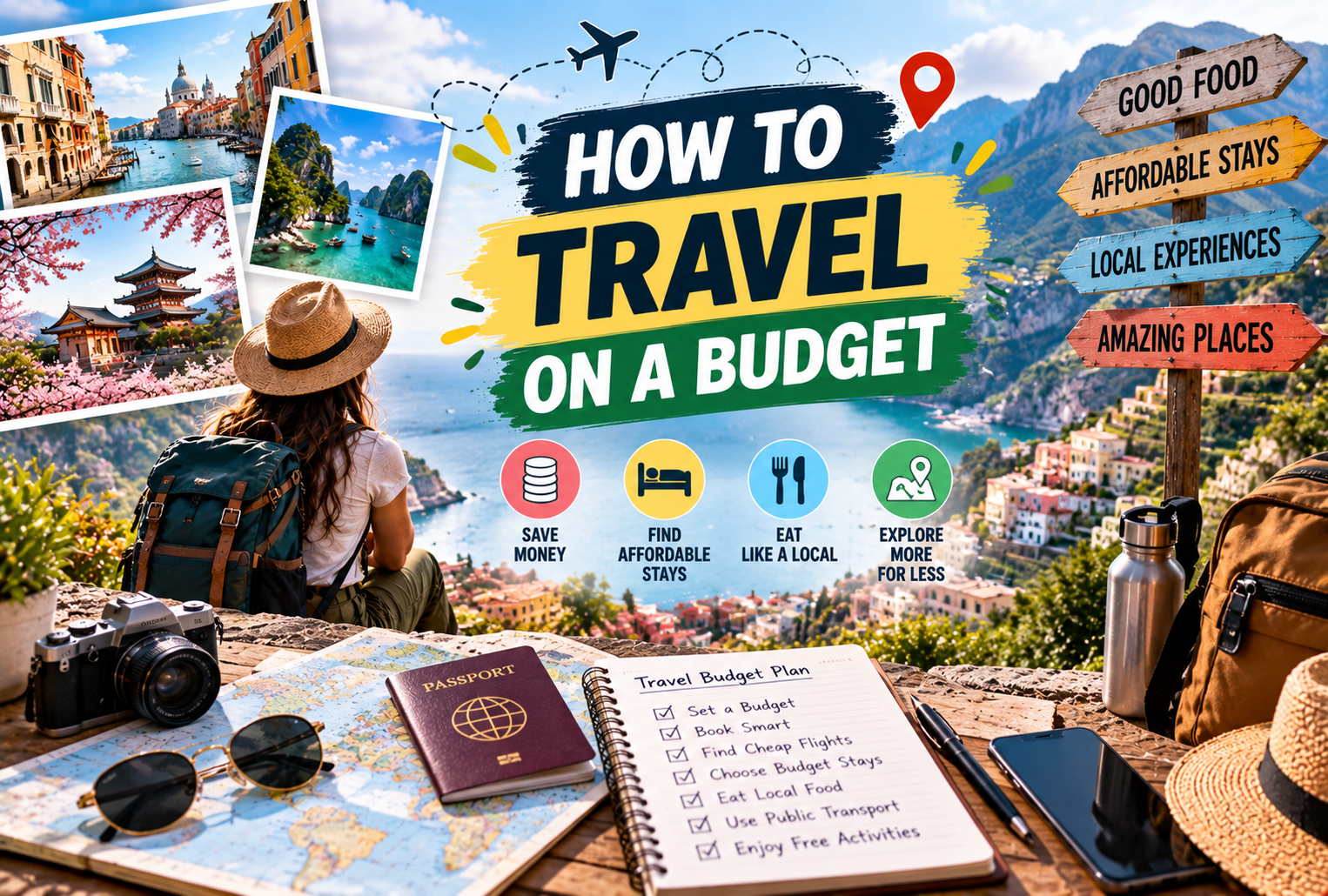
Travelling the world does not always require a luxury hotel, expensive flights, or a large holiday budget. With smart decisions and thoughtful planning, travellers can explore exciting destinations while keeping expenses under control.
Whether you are planning a weekend getaway, family holiday, or international adventure, understanding how to travel on a budget can help you enjoy meaningful experiences without unnecessary spending.
The secret to affordable travel is not avoiding every expense. It is knowing where to save money and where spending a little more can improve your experience.
This guide shares practical strategies for choosing destinations, comparing flights, finding affordable accommodation, and managing travel expenses in 2027.
How to Travel on a Budget Without Compromising Your Experience
Successful budget vacation planning begins with setting priorities.
Before choosing a destination, decide how much you can comfortably spend on the entire journey.
Your travel budget should include transportation, accommodation, meals, sightseeing, local travel, insurance, and emergency expenses.
Instead of selecting a destination first and worrying about the cost later, compare destinations that fit your available budget.
A flexible approach can help you discover enjoyable cheap vacation ideas without sacrificing comfort or safety.
1. Choose Affordable Travel Destinations
Some countries and cities offer better overall value because accommodation, meals, and transportation may cost less.
Travellers researching cheap international trips often consider destinations such as Vietnam, Thailand, Nepal, Sri Lanka, and Malaysia.
However, the cheapest destination is not necessarily the one with the lowest daily expenses.
Airfare, visa requirements, travel season, and distance from your departure city also influence the total cost.
For example, a destination with inexpensive hotels may become costly if flights are expensive.
Compare the complete journey before booking.
2. How to Find Cheap Flights
Learning how to find cheap flights is one of the most useful travel skills.
Airfares change according to demand, availability, route competition, and booking conditions.
Use comparison platforms such as Google Flights to explore different dates and routes.
Consider these strategies:
-
Compare nearby departure dates instead of searching for one fixed day.
-
Check alternative airports when practical.
-
Review baggage allowances before selecting a fare.
-
Compare direct and connecting flights.
-
Set fare alerts for routes you are monitoring.
-
Check airline websites before finalizing payment.
There is no universal booking day that guarantees the lowest price.
The most effective approach is to compare total costs and book when you find a suitable fare.
3. Explore Affordable Accommodation Options
Accommodation can account for a significant portion of holiday expenses.
Popular affordable accommodation options include hostels, guesthouses, budget hotels, homestays, and vacation rentals.
For solo travellers, hostels may provide lower prices and opportunities to meet other travellers.
Families may benefit from apartments with kitchen facilities, particularly during longer stays.
When comparing accommodation, check:
Location: Is the property close to public transportation?
Reviews: Do recent guests report consistent cleanliness and service?
Facilities: Are Wi-Fi, breakfast, and essential amenities included?
Additional charges: Are taxes, cleaning fees, or deposits excluded from the advertised price?
A slightly more expensive hotel near major attractions may reduce daily transport costs.
4. Create a Realistic Budget Travel Itinerary
A good budget travel itinerary groups nearby attractions and avoids unnecessary transportation.
For example, instead of visiting distant locations on the same day, organize activities by neighbourhood.
Consider this sample five-day structure:
| Day | Budget-Friendly Activity |
|---|---|
| Day 1 | Arrival and neighbourhood exploration |
| Day 2 | Free attractions and walking tour |
| Day 3 | Museums, markets, and local food |
| Day 4 | Affordable day trip or nature visit |
| Day 5 | Shopping and departure |
Leave enough flexibility for weather changes and unexpected discoveries.
5. Save Money While Travelling on Food
Food is an important part of travel, but eating at expensive tourist restaurants for every meal can increase costs.
To save money while travelling, explore local markets, casual restaurants, food courts, and affordable regional dishes.
Choose accommodation with breakfast included when the overall price offers good value.
Carrying a reusable water bottle can also be useful where safe drinking-water refill facilities are available.
Avoid compromising food hygiene merely to save a small amount.
6. Use Public Transportation
Public transportation is often cheaper than taking private taxis for every journey.
Many destinations offer metro systems, buses, commuter trains, and day passes.
Before arriving, research airport connections and local ticketing systems.
Some cities provide travel cards that reduce the cost of repeated journeys.
Walking between nearby attractions is another practical way to reduce expenses while exploring a destination.
7. Travel During Less Crowded Periods
Popular destinations often become more expensive during major holidays, festivals, school vacations, and peak tourism seasons.
Travelling during a shoulder season may provide better accommodation availability and a more relaxed experience.
However, consider weather conditions carefully.
A cheaper trip during heavy rainfall or extreme temperatures may not offer good overall value.
8. Avoid Hidden Travel Expenses
Some of the most useful low-cost travel tips involve preventing unexpected charges.
Watch for foreign transaction fees, airport transfers, baggage costs, attraction tickets, roaming charges, and cancellation penalties.
Review card conversion options and avoid unnecessary currency exchanges.
Consider travel insurance appropriate to your circumstances rather than assuming every low-cost policy offers identical coverage.
Sample Budget Breakdown
Here is an illustrative way to divide a travel budget.
| Expense Category | Suggested Share |
|---|---|
| Transportation | 35% |
| Accommodation | 30% |
| Food | 15% |
| Activities | 10% |
| Emergency Reserve | 10% |
These percentages are planning examples, not typical market prices. Adjust them according to your destination and travel style.
Budget Travel for Beginners: Common Mistakes
People exploring budget travel for beginners sometimes focus only on the cheapest advertised prices.
This can lead to inconvenient accommodation, expensive transfers, or restrictive flight tickets.
Other common mistakes include overpacking, ignoring cancellation policies, booking too many paid activities, and failing to reserve emergency funds.
The best budget holiday balances affordability with practical comfort.
Conclusion
Understanding how to travel on a budget can transform the way you plan holidays.
By choosing suitable destinations, comparing transportation options, finding affordable accommodation, and creating a practical itinerary, you can enjoy rewarding travel experiences while controlling costs.
The smartest travellers are not always those who spend the least. They are those who make informed choices and receive the best value from their travel budget.
For 2027, focus on flexibility, careful research, and meaningful experiences rather than expensive travel trends.