Travelling across India does not always require a large budget. From peaceful mountain towns and beautiful beaches to historic cities and cultural destinations, India offers plenty of opportunities for affordable adventures. With careful planning, you can enjoy local experiences, delicious food, comfortable accommodation, and exciting sightseeing without spending too much.
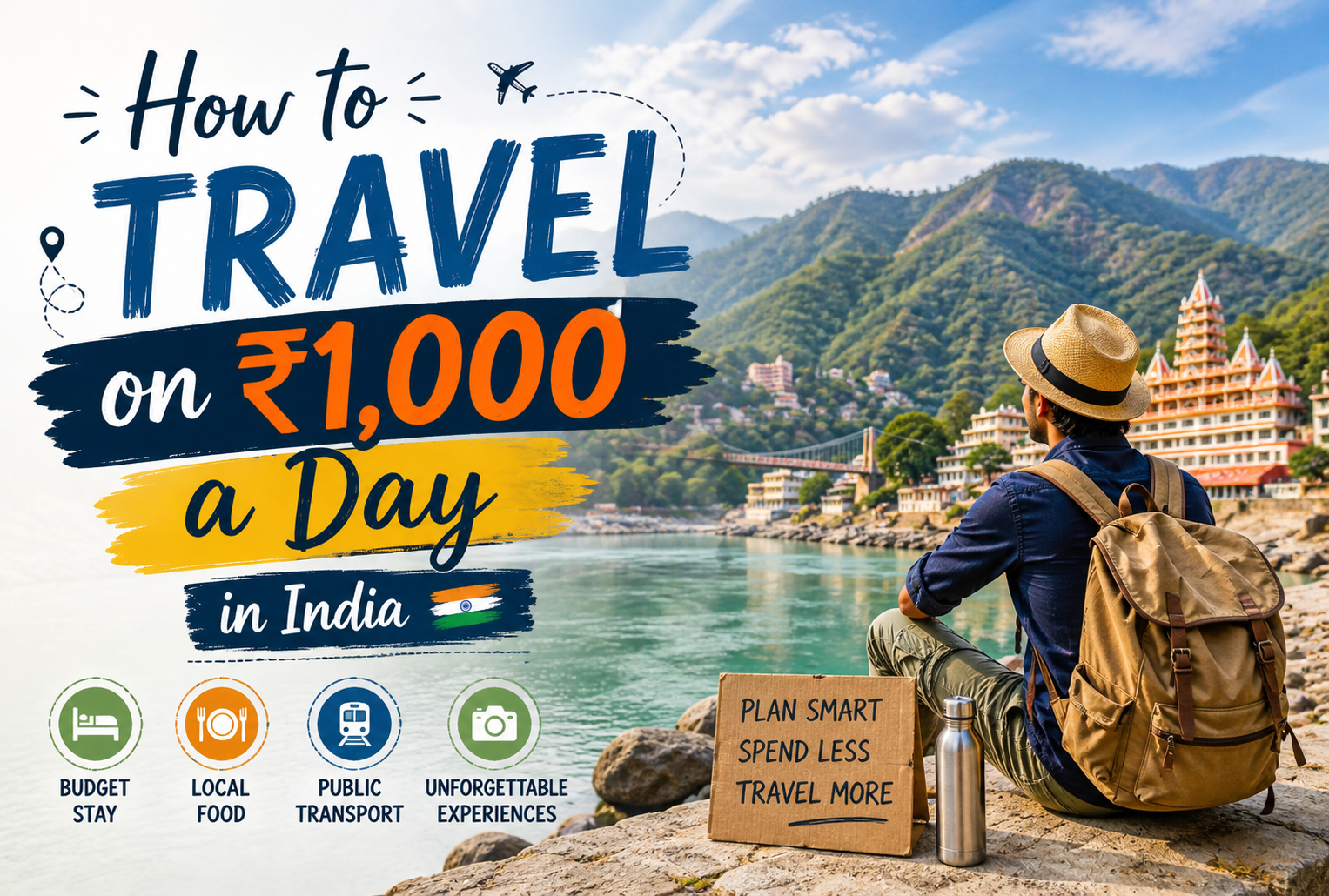
If you are wondering how to travel on ₹1,000 a day in India, the secret lies in managing your biggest expenses: transportation, accommodation, food, and activities. Choosing the right destination, travelling by public transport, eating at local restaurants, and avoiding unnecessary expenses can make a significant difference.
However, ₹1,000 per day is a realistic target mainly for solo travellers visiting affordable destinations. Your budget may need to increase during peak tourist seasons, in expensive cities, or when travelling long distances.
In this guide, you will learn how to plan a low-cost trip, find affordable places to stay, save money on food, and make the most of every rupee.
1. Plan Your Daily Travel Budget Before Leaving
The first step towards successful budget travel in India is deciding how much you can spend each day. Instead of spending money whenever something looks interesting, divide your budget into essential categories.
Here is an example of how to distribute ₹1,000 per day:
| Expense Category | Daily Budget |
|---|---|
| Accommodation | ₹350 |
| Food and drinking water | ₹250 |
| Local transportation | ₹100 |
| Sightseeing and activities | ₹150 |
| Emergency fund and miscellaneous expenses | ₹150 |
| Total | ₹1,000 |
These amounts are planning estimates, not guaranteed prices. Accommodation may cost more in popular destinations, while some days may require almost no spending on local transport or sightseeing.
If your destination is expensive, you can balance your budget by staying in a cheaper town, preparing some simple meals where facilities permit, or choosing free attractions.
Budget tip: Keep your emergency money separate from your regular spending budget. Avoid using it for shopping, snacks, or activities that you can skip.
2. Choose Affordable Destinations in India
Your destination has a major influence on your travel expenses. Some tourist cities have expensive hotels, restaurants, and taxis, while smaller towns offer more affordable options.
Consider these destinations when planning budget travel in India.
Rishikesh, Uttarakhand
Rishikesh is popular for its riverside views, yoga centres, temples, and peaceful atmosphere. Travellers can explore the Ganga ghats, attend the evening Ganga Aarti, and walk across its famous suspension bridges.
You can control your spending by choosing a hostel or basic guesthouse, eating at local restaurants, and exploring attractions on foot.
Pushkar, Rajasthan
Pushkar is known for its sacred lake, temples, colourful markets, and relaxed atmosphere. It is a suitable destination for travellers who enjoy cultural experiences without needing an expensive itinerary.
Walking around the old town, visiting the ghats, and exploring local markets can help keep your sightseeing costs low.
Varanasi, Uttar Pradesh
Varanasi offers a rich cultural experience through its historic ghats, temples, narrow lanes, and traditional food. Many of its most memorable experiences involve simply walking around the city and observing everyday life.
A sunrise boat ride or guided heritage walk will add to your expenses, so choose paid activities selectively.
McLeod Ganj, Himachal Pradesh
McLeod Ganj attracts travellers with its mountain scenery, monasteries, cafés, and hiking opportunities. Budget guesthouses and shared accommodation can help reduce your costs.
Plan your hikes carefully, check weather conditions, and account for transportation from the nearest major town.
Hampi, Karnataka
Hampi is famous for its remarkable ruins, boulder-strewn landscapes, and historic temples. Exploring the archaeological landscape can be rewarding for travellers interested in history and photography.
Choose accommodation in advance, compare transport options, and check entry fees for the monuments you want to visit.
Important: These destinations can fit different budgets depending on your travel dates and preferences. Check current room rates, transport fares, and attraction fees before finalising your plans.
3. Save Money on Transportation
Transportation can consume a large part of your India travel budget, especially if you frequently take taxis or book last-minute tickets.
Use these affordable transportation options wherever practical.
Travel by Train
Indian Railways connects many major cities and smaller towns. Booking suitable train classes in advance can help you travel more economically than choosing premium transport for every journey.
Compare routes, departure times, and ticket availability before booking. Always use official or authorised booking channels.
Use Government and Local Buses
State transport buses can be economical for travelling between nearby towns and cities. Local buses are also useful for reaching markets, tourist attractions, and transport hubs.
Check departure points and schedules before travelling, particularly in mountain regions where services may be less frequent.
Walk Whenever Possible
Walking is one of the easiest ways to reduce local transportation costs. It also allows you to discover neighbourhoods, street food, local markets, and hidden attractions.
For longer distances, compare the cost of public transport with walking time and safety.
Avoid Unnecessary Taxi Rides
Taxis and app-based cabs can quickly increase your daily expenses. Use them when necessary, such as travelling late at night, carrying heavy luggage, or reaching locations with limited public transport.
If you are travelling with other people, sharing a ride may reduce the per-person cost.
Budget tip: Calculate the total journey cost, including travel to and from railway stations or bus terminals. A cheap intercity ticket may not be the cheapest overall option if transfers are expensive.
4. Find Budget Hotels and Affordable Accommodation
Accommodation is often one of the biggest expenses for travellers. Fortunately, India offers several economical options for different travel styles.
Stay in Hostels
Hostels are useful for solo travellers who are comfortable sharing a room. They can also provide opportunities to meet other travellers and share information about affordable activities.
Compare the final price, location, reviews, security arrangements, and included facilities before booking.
Choose Basic Guesthouses
Family-run guesthouses and budget lodges may offer simple, comfortable rooms at reasonable prices. Staying slightly away from the busiest tourist areas can sometimes reduce accommodation costs.
However, consider transport expenses and the time needed to reach attractions before selecting a distant property.
Consider Dormitories
Railway tourism facilities, backpacker hostels, and some tourist destinations offer dormitory accommodation. Availability and prices vary, so check the specific property before relying on this option.
Book in Advance
Booking early can help you find affordable rooms, especially during holidays, festivals, and popular travel seasons. Compare prices across booking platforms and check whether taxes or additional fees are included.
Safety reminder: Choose accommodation with reliable reviews, secure storage, and a convenient location. Saving a little money is not worth compromising your personal safety.
5. Eat Cheap and Enjoy Local Indian Food
Food is one of the easiest expenses to manage when you are travelling on a limited budget. India offers a wide variety of affordable regional dishes, from idli and poha to dal, rice, roti, and vegetable thalis.
Eat at Local Restaurants
Local eateries often serve filling meals at lower prices than restaurants designed primarily for tourists. Look for places with good hygiene practices and a steady flow of customers.
Try regional specialities to experience the local culture without spending heavily.
Choose Simple Breakfasts
A breakfast of poha, idli, paratha, or other local dishes can be affordable and satisfying. Prices depend on the city, portion size, and restaurant.
Carry a Reusable Water Bottle
Carry drinking water from a safe, reliable source where practical. Refill only where the water is confirmed potable, or purchase sealed drinking water when necessary.
Avoid drinking untreated water if its safety is uncertain.
Limit Frequent Café Visits
Coffee shops, bakery snacks, and expensive beverages can add up throughout the day. You do not need to avoid them completely, but plan occasional treats rather than making them a daily habit.
Avoid Food Waste
Order portions you can comfortably finish. If you have access to suitable facilities, carrying simple snacks can also help you avoid expensive purchases during long journeys.
Budget tip: Set a daily food limit before leaving your accommodation. Keep enough flexibility for destinations where prices are higher or meals cost more than expected.
6. Enjoy Free and Low-Cost Activities
A memorable trip does not need to involve expensive attractions every day. Many of India's most interesting experiences are free or inexpensive.
Here are some ideas:
-
Explore historic neighbourhoods and local markets.
-
Visit public parks and gardens.
-
Enjoy sunrise or sunset viewpoints where access is permitted.
-
Attend public cultural events and religious ceremonies respectfully.
-
Walk through heritage streets and traditional shopping areas.
-
Discover local architecture and public spaces.
-
Enjoy nature walks on safe, permitted trails.
-
Visit museums or monuments with low entry fees on selected days, where applicable.
Before visiting any attraction, check its opening hours, entry charges, photography restrictions, and local rules.
For a ₹1,000 daily budget, choose one or two paid experiences rather than trying to visit every attraction in a single day.
7. Travel During the Off-Season
Travel dates can affect accommodation, transport availability, and activity costs. Visiting a destination outside its busiest period may help you find better deals.
For example, some hill stations are especially popular during summer holidays, while beach destinations may experience higher demand during winter or festive periods.
Before travelling, consider the following:
-
Compare accommodation prices across different dates.
-
Avoid major festivals and holiday weekends if your schedule is flexible.
-
Check the weather before travelling during the monsoon.
-
Confirm whether attractions and transport services operate during your planned dates.
-
Consider shoulder seasons when conditions are suitable.
The cheapest time to visit is not always the best time. Extreme heat, heavy rain, difficult road conditions, or closed attractions can make a low-cost trip less enjoyable.
8. Pack Smart to Avoid Extra Expenses
Packing thoughtfully helps you avoid unnecessary purchases during your journey.
Your budget travel packing list should include:
-
Comfortable walking shoes.
-
Weather-appropriate clothing.
-
A reusable water bottle.
-
Essential medicines and a basic first-aid kit.
-
A power bank and charging cable.
-
Personal hygiene items.
-
A small daypack.
-
Copies of important travel documents.
-
A rain jacket or sun protection when needed.
Check the weather forecast and transport baggage rules before leaving. Avoid packing unnecessary items that make walking and public transportation more difficult.
You should also keep some emergency cash in a secure place and use a reliable method for digital payments.
9. Use Technology to Find Better Travel Deals
Digital tools can help you compare prices, plan routes, and avoid unnecessary expenses.
Useful travel-planning habits include:
-
Compare train and bus options before booking.
-
Check several accommodation providers instead of choosing the first result.
-
Download offline maps for areas with unreliable internet access.
-
Save booking confirmations and important contact details.
-
Check attraction information on official websites.
-
Track your spending with a notes app or budget spreadsheet.
-
Verify cancellation policies before paying for bookings.
Be careful with offers that appear unusually cheap. Confirm the provider, final price, payment terms, and reviews before making a booking.
10. Follow These Budget Travel Tips for India
If you want to make your money last longer, use a few simple habits throughout your trip.
Set a spending limit: Decide your daily budget and record expenses at the end of each day.
Avoid last-minute bookings: Whenever possible, book transport and accommodation early.
Stay longer in fewer places: Constantly moving between destinations increases transportation costs. Spending two or three nights in one place can be more economical.
Choose accommodation near public transport: A slightly more expensive room may save money if it reduces daily taxi fares.
Compare the total cost: Consider transport, food, accommodation, entry fees, and transfers rather than looking at individual prices alone.
Be selective with shopping: Souvenirs and impulse purchases can quickly exceed your planned spending.
Keep an emergency reserve: Do not spend your entire budget on routine activities. Unexpected delays, medical needs, or transport changes may require extra money.
These habits make low-budget trip planning in India easier and help you travel with greater confidence.
11. Sample One-Day Budget Travel Itinerary
Here is an illustrative day showing how a traveller might manage ₹1,000 in an affordable destination.
| Activity or Expense | Estimated Cost |
|---|---|
| Budget hostel or dormitory | ₹350 |
| Breakfast | ₹60 |
| Lunch | ₹100 |
| Dinner | ₹120 |
| Local transportation | ₹80 |
| Sightseeing or entry fees | ₹100 |
| Snacks and drinking water | ₹70 |
| Emergency reserve | ₹120 |
| Total | ₹1,000 |
This example is a planning template, not a guarantee of current prices. You may need to adjust the amounts depending on the destination, season, and available accommodation.
Example Daily Schedule
7:00 AM – Start the day: Have a simple local breakfast and plan your route.
8:00 AM – Explore on foot: Visit a nearby market, heritage area, riverside, or public attraction.
11:00 AM – Enjoy a local experience: Explore a temple complex, public garden, or other low-cost destination.
1:00 PM – Have lunch: Choose an affordable local meal.
2:00 PM – Relax or explore: Visit another nearby attraction or take a break during the hottest part of the day.
5:00 PM – Enjoy the evening: Explore a public viewpoint, walk along a permitted riverside path, or visit a local market.
7:30 PM – Have dinner: Choose a simple meal and return to your accommodation using a safe transport option.
9:00 PM – Review your expenses: Record what you spent and adjust the next day's plan.
The itinerary can be adapted to different destinations. Avoid scheduling too many activities in distant locations, as extra travel can increase both costs and fatigue.
12. Is ₹1,000 a Day Enough for Travelling in India?
Yes, ₹1,000 per day can be enough for some solo travellers, particularly in smaller cities and affordable tourist destinations. However, it requires realistic expectations and careful spending.
Your budget is more likely to work when:
-
You choose economical accommodation.
-
You use public transportation.
-
You eat at affordable local restaurants.
-
You focus on free or low-cost experiences.
-
You avoid frequent intercity travel.
-
You travel outside peak demand periods when practical.
The budget may be difficult to maintain in expensive metropolitan areas, luxury destinations, remote regions with limited transport, or locations where accommodation prices are high.
Also, distinguish between your daily destination budget and your complete trip budget. If ₹1,000 covers accommodation, food, local transport, and sightseeing, your long-distance journey to reach the destination may require additional money.
For example, a seven-day trip at ₹1,000 per day requires ₹7,000 for seven days of planned spending. Add intercity transport, travel insurance where appropriate, and any other costs excluded from the daily budget.
Planning for the complete trip will help you avoid unpleasant financial surprises.
Conclusion
Travelling in India on a limited budget is possible when you make thoughtful decisions about where to go, where to stay, what to eat, and how to get around. You do not need luxury accommodation or expensive attractions to enjoy the country's diverse landscapes, local culture, and regional food.
The best way to understand how to travel on ₹1,000 a day in India is to create a practical daily budget, prioritise affordable experiences, and leave room for unexpected expenses.
Start with a destination that suits your budget, compare prices before booking, and focus on experiences that matter most to you. With a little preparation, you can enjoy a rewarding Indian travel experience while keeping your spending under control.
Travel smart, spend wisely, and make every rupee count!