
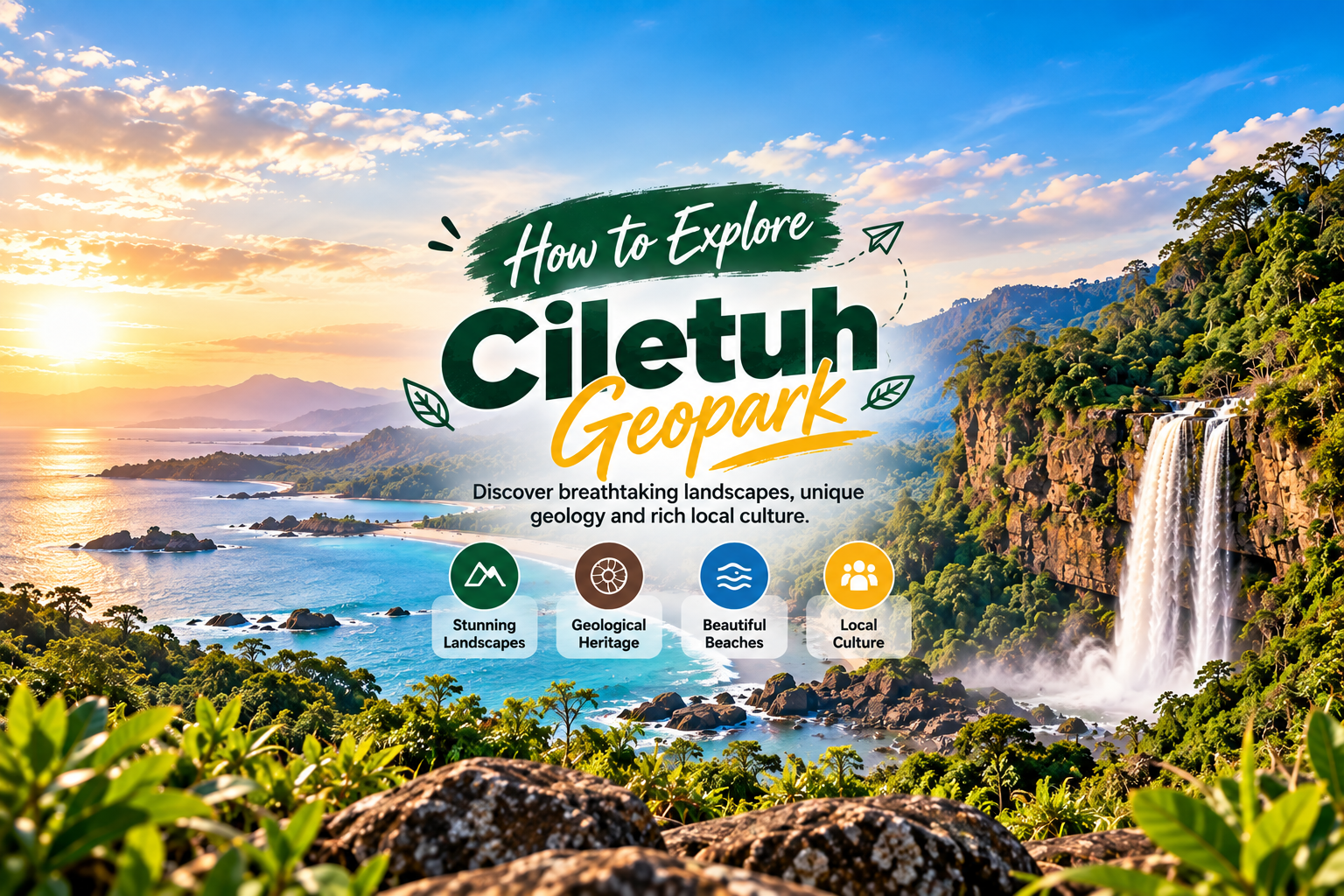
West Java is home to one of Indonesia's most breathtaking natural landscapes — and most travelers still haven't heard of it. Ciletuh Geopark, a UNESCO-designated wonder tucked into the southern coast of Sukabumi Regency, is the kind of destination that rewards those willing to make the journey. Ancient rock formations, thundering waterfalls, dramatic cliffs, and pristine beaches all come together in one extraordinary place. This complete guide on how to explore Ciletuh Geopark covers everything you need to know — from getting there to the top things to do — so you can plan your trip with confidence.
What is Ciletuh Geopark?
Officially known as the Ciletuh-Palabuhanratu UNESCO Global Geopark, this protected area covers approximately 128,000 hectares across 8 districts and 74 villages in Sukabumi Regency, West Java, Indonesia. It was first recognized as a national geopark in 2015 and officially designated a UNESCO Geopark Indonesia member on April 17, 2018.
The name combines two landmarks: the Ciletuh River and Palabuhanratu, meaning "Queen Harbour" — a nod to the local legend of the Queen of the Indian Ocean, a guardian figure deeply rooted in the region's cultural identity.
Geologically, the geopark sits atop a tectonic subduction zone where the Indo-Australian plate slides beneath the Sunda plate. This process — along with the convergence of three major tectonic plates (Eurasian, Pacific, and Philippine Sea) — has produced one of the most remarkable geological landscapes in Southeast Asia. The highlight is the Ciletuh Amphitheatre, Indonesia's largest horseshoe-shaped natural amphitheatre, formed by the ancient collapse of the Jampang Plateau. Inside it, you'll find nine spectacular waterfalls, 65-million-year-old rock formations, and lush tropical forest. If you're the kind of traveler who loves wild, untouched natural destinations — similar to how to visit Khao Sok National Park in Thailand — Ciletuh will not disappoint.
How to Get to Ciletuh Geopark
Getting to Ciletuh Geopark is part of the adventure. The geopark is located roughly 6 hours by car from Jakarta, and the drive can stretch longer on weekends due to traffic. The most common route passes through Sukabumi city before heading south toward Palabuhanratu and then deeper into the geopark.
Here are the main ways to get there:
- Private Car or Rental: The most flexible option. You can stop along the way and set your own pace within the park.
- Hired Tour Guide: Services like Java Private Tour offer guided trips from Jakarta or Sukabumi and are a great option if you're unfamiliar with the roads.
- Public Transportation: It's possible but complicated. You'd need to take a bus to Sukabumi, then an angkot (local minivan) toward Ciemas. Not recommended for first-time visitors.
Once inside the geopark, renting a motorbike locally is strongly advised. The roads are narrow, bumpy in places, and many of the best sites are only accessible on two wheels. Those planning international trips from South Asia can also check out visa free countries for Indian travelers to see if Indonesia is on their list — it often is, depending on your passport and travel dates.
Best Time to Visit Ciletuh Geopark
The best time to visit as part of your West Java travel guide planning is during the dry season, which runs from May to October. During these months, the weather is more predictable, the hiking trails are drier, and the roads are far easier to navigate on motorbike.
That said, visiting in the wet season (November to April) has its own appeal. The waterfalls are more powerful and dramatic, and the landscape turns an even deeper shade of green. Just be prepared for muddy roads and the occasional trail closure.
Regardless of when you go, try to avoid visiting on public holidays or long weekends. The roads from Jakarta fill up fast and what would normally be a 6-hour drive can turn into 9 or 10.
Top Things to Do in Ciletuh Geopark
Chase the Waterfalls
No Ciletuh Geopark travel guide would be complete without a deep dive into its waterfalls. The Ciletuh Amphitheatre is home to nine waterfalls, and visiting as many as you can is one of the main events of any trip here.
The most popular include:
- Curug Cimarinjung: One of the most photographed waterfalls in the park, located near the base of Puncak Darma hill. It's accessible and dramatic.
- Curug Sodong: Wider and more powerful, often called the most majestic of the nine.
- Curug Awang: Another standout, with a strong flow and a beautiful natural pool below.
- Curug Puncakmanik and Sudong: Less visited but equally stunning. Sudong is particularly special because you can actually swim in the natural pool at its base.
The Ciletuh Geopark Waterfalls are best visited in the morning when the light filters through the forest canopy. Always wear appropriate footwear — the paths can be slippery. Travelers who love waterfall-heavy destinations might also enjoy planning a Kauai trip, Hawaii's most lush and scenic island.
Climb to the Viewpoints
Standing at the top of Puncak Darma — the highest point in the geopark — is one of the most memorable experiences you can have in West Java. From the summit, you get a sweeping panoramic view of the entire Ciletuh Amphitheatre, with the ocean shimmering in the distance and waterfalls cascading far below.
Getting to the top takes about 2 to 3 hours on foot, or you can hire a local motorcyclist to take you up — bumpy, steep, and genuinely thrilling. Sunset from Puncak Darma is exceptional, so plan your ascent accordingly.
Bukit Panenjoan is another excellent viewpoint, easier to access and perfect for those who prefer a more relaxed experience. It offers sweeping views of rice fields, forest, and coastline — a classic Javanese landscape that feels a world away from the capital.
Explore the Beaches
The Palabuhanratu and Palangpang beaches are the two most popular along the geopark's coastline. Palabuhanratu is a proper beach town with accommodation, seafood restaurants, and consistent surf breaks. Palangpang is quieter and sits right at the base of the amphitheatre, making it a stunning spot to end a day of waterfall-hopping.
While the beaches here aren't the postcard-turquoise variety you'd find when planning a Muna Island travel guide trip in Southeast Sulawesi, they have a raw, dramatic beauty that feels authentic and unspoiled.
Take a Boat Trip
Hopping on a traditional fishing boat is a great way to see Ciletuh's striking coastal rock formations from the water. You'll also pass large "bagan" fishing vessels stationed offshore, and if you're lucky, you might spot a pod of dolphins trailing behind the boat. Bring sunscreen — many of these boats have no overhead shelter.
Visit the Turtle Conservation Park
At Pangumbahan Turtle Conservation Park, one of the largest sea turtle breeding facilities in Indonesia, you can witness green sea turtles coming ashore to lay eggs (typically in the evening) or watch hatchlings being released into the ocean. It's a genuinely moving experience, especially if you visit with kids.
Soak in the Hot Springs
After a full day of hiking and riding, the natural hot springs near Cisolok are the perfect way to recover. The Cisolok Geyser — where geothermal activity shoots jets of hot water and steam into the air — is one of the geopark's more unusual geological attractions. The nearby hot spring "spa," where a strong-pressure water massage costs around $5, is popular with locals and visitors alike.
Experience the Local Culture
The geopark isn't just geological — it's deeply cultural. Visit Kampung Batik Purwasedar to watch local artisans create Pakidulan Batik, a traditional textile form inspired by the park's natural landscapes, using eco-friendly dyes made from roots, leaves, and tree bark. Traditional villages like Kasepuhan Sirnaresmi and Ciptagelar preserve ancestral customs, folk tales, and ceremonial dances like the Jipeng.
Ciletuh Geopark Travel Guide: Practical Tips
Before you go, here are some practical tips to make the most of your trip:
- Accommodation: Book in advance, especially for weekend visits. Options range from guesthouses in Palabuhanratu to homestays near Ciemas. Don't expect anything like the world's most expensive hotels — but many options are clean, friendly, and well-located.
- Cash is king: ATMs are limited inside the geopark. Bring enough Indonesian Rupiah before you leave Sukabumi or Palabuhanratu.
- Pack wisely: Bring sunscreen, a rain jacket, insect repellent, and sturdy waterproof footwear.
- Stay at least 2 nights: One day is not enough. A minimum of two nights allows you to comfortably cover the waterfalls, a viewpoint, and the beaches.
- Hire a local guide: Local guides know which roads are passable and can take you to spots that aren't on any map. They also help support the local economy.
- Mobile data: Coverage is patchy in some areas. Download offline maps before you leave the city.
Adventure seekers who enjoy exploring on two wheels might also want to check out the Delhi to Ladakh bike trip guide — another incredible journey through dramatic mountain terrain. And for those who love mixing ancient geology with iconic landmarks, don't miss the guide on how to explore the famous Batu Caves in Kuala Lumpur, an easy side trip if you're traveling through Malaysia on your way to Indonesia.
Final Thoughts
How to explore Ciletuh Geopark isn't a question with a single answer — it depends on whether you're here for the waterfalls, the geology, the beaches, the culture, or all of the above. What's consistent is this: the geopark rewards curiosity. The more you explore, the more it gives back.
This is a destination that's still finding its footing on the international travel radar. Visit now, while it's quiet enough to feel like a discovery. Start planning your Ciletuh Geopark trip today, and experience one of West Java's most spectacular natural wonders for yourself.